
The Bridge Goes Both Ways
A few weeks into the school year, you might find yourself holding the hand of a child who has been walking to class alone since September. Or maybe the child who used to fall asleep after a goodnight hug now needs you to sit at the edge of their bed for an hour. Just when you thought they'd turned a corner, they seem to need you again.
These moments can create a lot of frustration and might feel like backsliding, but they’re actually an important sign of development in the works.
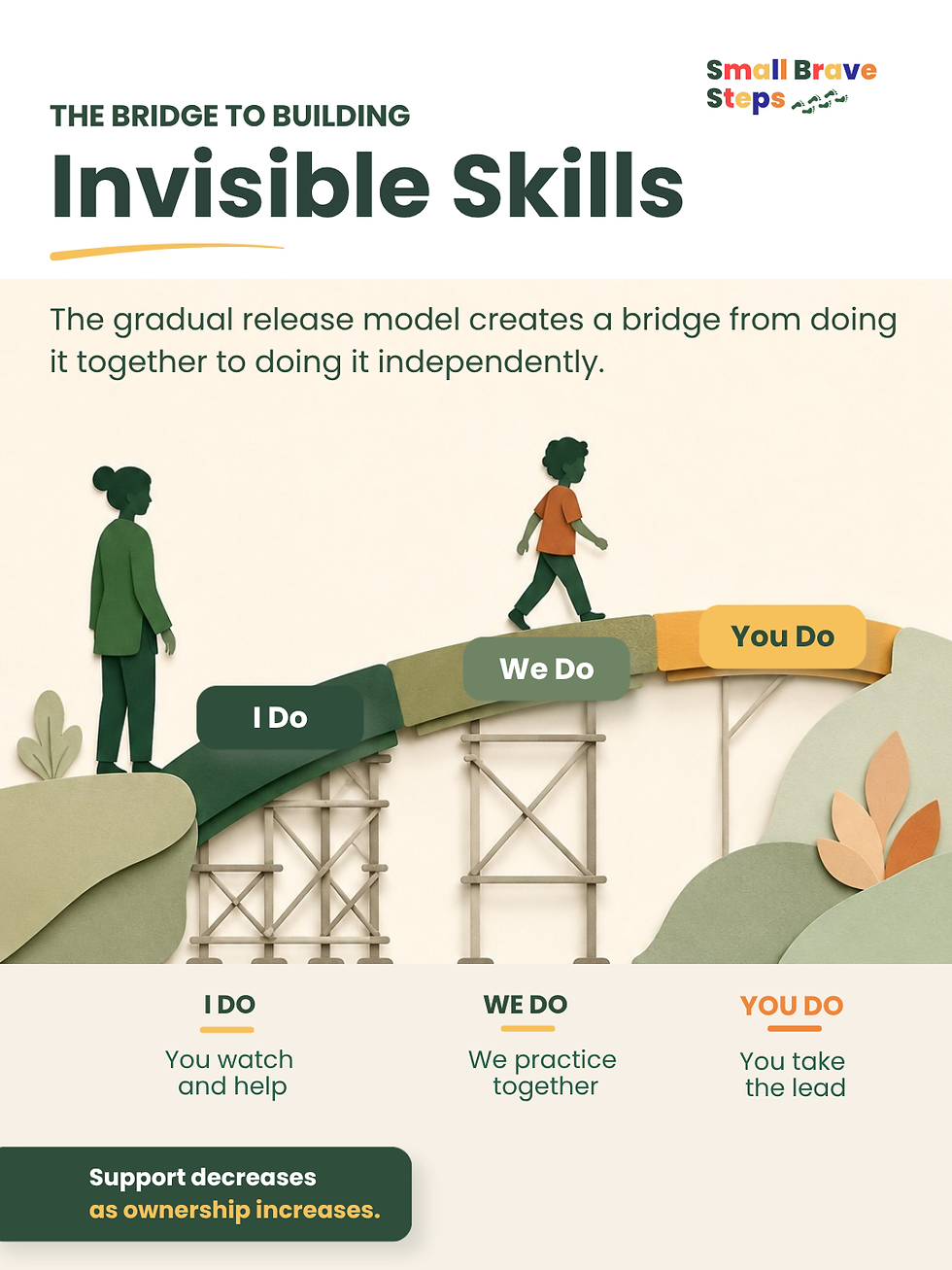
Educator Lesley Koplow describes development as a bridge a child travels back and forth across. It lets them venture ahead of themselves, toward bigger-kid challenges and new independence, and it lets them run back to the younger, more familiar version of themselves when they need to. Growing up requires moving in these different directions, and running back is actually what ultimately allows a child to advance forward.

My daughter is now a freshman in high school, who initially responded to this big transition with remarkable maturity. Last week, however, she completely fell apart over a homework assignment. This quickly turned into a full-blown breakdown of her insisting that she wouldn't be able to remember anything she read in her textbook, that she would never succeed in high school, and that basically there wasn’t anything we could do about it. In that moment I couldn’t help but remember my once fussy toddler.
Much like we did back then, I chose to let her take a break, have a snack, and work through some trial and error together until finally she decided she could finish her homework alone. Later that afternoon she realized that the meltdown had probably come from a place of exhaustion after not having slept well the night before. She also acknowledged that when something is new her brain has a tendency to convince her that it’s more than she can handle. After talking it through she decided that the next time this happened, she’d take a break first and try to figure out what to say to herself before letting her brain get back to that space. With so much introspection at hand, that moment felt like I was back to dealing with a reflective adult.
My dad used to say that a child is actually three ages simultaneously: their given age, several years older and several years younger. As a career early childhood educator, I saw that to be true of countless young children, but as a parent, I’m learning that this theory applies at all ages. The shape of it is universal too. It’s a constant back and forth between striving and needing, between capability and collapse, between the child who surprises you and the one who needs you to start over from the beginning.
Teachers often describe development as a spiral rather than a straight line. Children revisit familiar challenges as they grow, even as their skills change. At fourteen, my daughter still needed help taking a pause and breaking a task into steps, just as she had at seven. I remember seeing this when she was a toddler too. There was a period when even small frustrations became almost impossible to soothe until, seemingly overnight, her language took off. At the time, I couldn't see what was changing, I only knew that things she'd previously managed were suddenly becoming more difficult.
Once we've seen our children do something independently, it's natural to expect them to continue doing it, but having a skill doesn't mean being able to use it consistently every day. Exhaustion, stress, and the demands of learning something new can all affect what a child is capable of managing in a given moment. This doesn't mean we stop encouraging independence or adjusting our expectations as children grow. It means recognizing when they need a little more support, whether that's taking a break, helping them get started, or working through something together until they're ready to try again.
I think that's what makes Koplow's bridge such a helpful way to understand development. When children return to us for reassurance or help with something they've already learned, we can recognize that they haven't necessarily lost the progress they've made. Sometimes they simply need to revisit familiar ground before they're ready to move forward again.

Comments